You Have Dystonia?

I have D-Y-S-T-O-N-I-A? No, it’s not a former Soviet Socialist Republic but a neurological movement disorder.

So what is Dystonia? Let’s set aside medical formalities and fast-forward to practical realities. Imagine you’re trying to jot down a grocery list and, quite inconveniently, someone jerks your elbow up and down, making it difficult – if not impossible – to control your writing. Or maybe you tackle something complicated like walking across a room. You lift your leg to begin that first step when a mischievous troll screws up your balance by pulling your foot inward, causing you to land on the side of your foot and desperately search for stability. Simultaneously, some imp twists your knee while your hip dips and swings in a motion that would swirl a hula-hoop.

Welcome to my Dystonia!

Dis*ease Unease!

For most of my life, I’ve been “dis” at ease with my Dystonia, so if the shoe fits…

5922589_sThere are a number of nasty words in the English language but perhaps none worse than  “dis*ease,” “dis*ability” and “handicap.” They make us feel less than whole human beings and fling us outside some perceived realm of “normalcy,” promoting discomfort with what I call lack of perfection. They beg the questions: Is there something wrong with ME? I move, therefore I am? I spent years chasing idealized images until stopping short at the conclusion my flawed realities will have to do perfectly fine. Besides, I prefer to see life as a philosophical and psychological journey rather than a crooked walk down the street.

We all share in creating dis*ease unease: personal discomfort with outward signs of weakness, inquisitive (I didn’t say mean-spirited) stares turning humans into objects, well-intentioned questions, unsolicited assistance invading silently staked personal dignity. No one wants to envision taking on the physical and emotional struggles of illness but for many, ill-health is transacted as an inescapable aspect of the business of life.

When dis*ease turns on a dime, remarkable is the proliferation of the healthy, blissfully unaware of their fragile status. People fail to appreciate the feats of nature in the properly functioning body until the control system goes awry, focusing on beauty bumps that mar the surface. 13299032_sWe worship flawlessness, youth, good looks, virility, physical strength, aiming for the maddeningly elusive perfect 10. When I confess my desire for someone’s easy lope, they laughingly note how I hardly covet their stride while I stand mystified. Perhaps they imagine a pigeon toe, wobbly knee, or less than shapely leg, rather insignificant compared with the navigational mischief practiced by my naughty neurotransmitters.

Our true beauty resides beneath the skin in how we open our hearts to life and share our souls with others. Dis*ease can distort the pretty picture that’s merely gift wrapping, requiring us to appropriate Superman’s x-ray vision and judge one another for the qualities we carry, catapulting dis*ease into ease.

Showing Up For The Party!

6792724_sWhen I was a little girl, my mom taught me the importance of showing up for the party. Boy, was she right!

As I muse over my experience at Dystonia Advocacy Day, I ponder the significance of our actions. While we volleyed many an impassioned speech, I can’t help but wander to the conclusion it all comes down to showing up. Implanted with medicine pumps and medical devices, toting our loathsome pills, a few sporting motorized scooters or walking sticks, Dystonia hailed to D.C. armed with an arsenal of war stories to announce our presence.

Tasked with a day of legislative sorties on Capitol Hill, putting ourselves out there is no small matter. Showing up means summoning the courage to relive our most traumatic moments with a series of strangers, some paying only polite attention to our deepest frustrations. Showing up means risking an emotional bottleneck that messes with the best-rehearsed oration. It entails listening to nasty words like “sequestration” and watching life issues we battle every day transformed into talking points in a gridlocked budget process. Showing up denotes enduring a hectic, stressful schedule that wrecks havoc with our Dystonia for the same cause. It makes a simple but profound statement how we need help from our government to enjoy our freedom to move. Showing up is worth 1,000 pictures times 1,000 words…I can only hope mine were fully understood but I know my attendance was duly noted.

I must give mention to Team NY, which certainly “showed up” for business. After lending 2 of our crew to switch-hit for NJ, we comprised 3 Dystonia ladies, 1 husband and 1 father determined to wield our expertise. After all, Congress has much to learn about Dystonia. We opened our hearts, laughed our way through our emotions, swooped in to support one another, even caught a ride on the exclusive underground train. Talk about tired; by the end of the day, we could barely remember our personal details!

Here’s to fellow troopers Allison London, Ron Hersh, Denise Gaskell, Greg Gaskell, and members in absentia, Rachelle Robert and Christina Pepi, who were with us in spirit. Traipsing through the Halls of Power with the top soldiers in the state made my day!

If you plan to change the world – or even one small corner – start by showing up for the party!

Dystonia Advocacy Day, May 1, 2013
Capitol Hill, Washington, D.C.
  • National Institutes of Health (NIH) appropriation of $32 billion, a necessary increase to allow continued funding of important research programs.
  • Active support for the Dystonia research portfolio at NIH including the Dystonia Coalition and participation of Dystonia researchers in the Brain Research through Advancing Innovative Neurotechnologies (BRAIN) Initiative.
  • Inclusion of Dystonia as a condition eligible for study in the Dept. of Defense (DOD) Peer-Reviewed Medical Research Program.
  • Long-term solution to the Medicare Sustainable Growth Rate (SGR) formula that adequately reimburses physicians and ensures patient access to quality care.

Reflections Of A Dystonia Advocate: The Power Of Unity

18210466_sAs I embark upon my second trip to Capitol Hill as a Dystonia Advocate, I reflect upon what this journey means to me and from whence we came. Of course, it’s an honor to speak for Dystonia and interject our issues into the legislative process but there’s even more beneath the surface. Dystonia Advocacy Day is an awesome display of the power of unity, which goes to the heart of our community and is precisely what we need to fuel our hope for a cure. Though Dystonia often feels like an amalgamation of different conditions, we stand strongest together. We share an imperative of unity of spirit, purpose and action.

Not so long ago, as recently as the early 1970s, there were no foundations fighting for us let alone a group of advocates advancing our cause in D.C. The organized cause of Dystonia is a story of the tenacity and determination of parents – including mine – who insisted on combatting a mysterious medical disorder and harboring hope for a better life for their children…also of patients who dared to dream of a world without Dystonia.

The Dystonia Medical Research Foundation (DMRF) tells a tale of how adversity connects strangers and extends families. When they founded DMRF in 1976, Samuel and Frances Belzberg planted seeds of promise in a destitute garden, carrying on their backs the hope of their daughter, Cheri, and Dystonia patients across North America. Banishing “surrender” from their vocabulary, the Belzbergs determined to slay the beast and support others facing the same foe.

This Vancouver family wasn’t alone. My parents stood tall when research was scarce and every foot forward measured a mile, including their part in the 1st International Dystonia Symposium in NY. I like to think fate brought my father to the Belzbergs but this is best attributed to his resolve to move mountains…or at least cross a continent! In 1981, Dennis and Barbara Kessler made their way to DMRF after their son, Arthur, was diagnosed, donating their hearts and souls. Families such as these – holding little in common beyond a rare movement condition – are bound by unity of spirit and purpose, coming together to light the path towards a brighter future.

Once the snowball gets rolling, it achieves its own momentum. In the early 1990s, Bonnie Strauss, a proactive Dystonia patient in New York, whose mother and grandmother were afflicted with Parkinson’s, teamed with her father, Louis Bachmann, and translated her aspirations into an annual golf tournament that burgeoned into the Bachmann-Strauss Dystonia & Parkinson Foundation. Bonnie enlisted family and friends to join her battle and once again the power of unity spoke loudly. Conviction, dedication, fortitude, perseverance – these are sacred words.

I feel honored to enjoy special bonds with both foundations: my father, the DMRF’s first Treasurer, played a key role propelling DMRF and Bachmann-Strauss is my “home away from home” in New York City. However, most vigorous is my connection with the Dystonia community, encompassing patients, families, caregivers, clinicians, and devoted organizations reflecting the diversity of Dystonia. Led and staffed by remarkable individuals, these organizations raise their voices and help man the front lines in a war that holds promise but has yet to be won. In a world riddled with selfishness, neglect, violence, even insane acts of terror, we all need friends and I’m grateful to everyone who works tirelessly to advance our hope.

I can’t help but marvel at the spirit of cooperation showcased during Advocacy Day, when individuals from throughout the country representing the full spectrum of Dystonia gather as one big family in pursuit of our common objectives. Join the fight – advocate, spread the word, share your story, volunteer, blog, fundraise – the particular action is less important than making that critical step to become involved. We need rise proud as a community, making a difference with a resounding symphony of concerted action. It’s my privilege to participate in the unity of Dystonia and our combined human potential to shape opinions and events. Take that leap of faith, never say “never” and never give up!

Check Out Some Community Friends:
Dystonia Medical Research Foundation

Going To The Gym aka Extreme Sports

13593724_s editedAm I able to use the gym? The questions people ask! Heavens, I inhabit the same world as the rest of you…or do I?

Going to the gym is like careening through a rabbit hole into a surreal Wonderland full of disquieting adventures! While I watch fellow “athletes” deftly execute coups of gluteus, hamstring and trapezius on strange, weight-bearing apparatus, I largely refrain from partaking in their revelry, instead creating my own zany tea party.

For starters, any unstable surface challenges this house of cards, causing my muscles to go haywire and summoning my core to control the show. My Mad Hatter is a device I call the “marshmallow” – flat on one side, rounded rubber cushion on the other (exercise mavens know this as the Bosu ball). My feat? I “stand” on the rounded surface and wave my arms in the air to further mess with my balance. Give that device a go during an earthquake and you’ll see my task isn’t quite so easy as it looks.

My personal triathlon involves a deceptively simple maneuver – the one-legged squat – on stable ground. Try supporting your entire corpus on one leg and then bobbing up and down while engaging in bodily combat with movement disorder! My left leg insists on a quirky diagonal directional that precariously holds my weight as I teeter through the motion while somehow remaining upright. Three sets: that’s a workout!

For much of my life, the gym didn’t even appear as a blip on my radar. Courtesy of a handful of trainers who’ve done Lewis Carroll proud, I’ve crafted my own realm of possibilities. Rather than coveting unreasonable exploits beyond my reach, I rule over the territory I’ve conquered including a tamed Madame Bosu – now that deserves a spotlight on my résumé!


April Is All About Parkinson’s

14731123_s editedEvery clan enjoys its special celebrations. In my extended family, April marks Parkinson’s Awareness Month and I’m offering up a treat in honor of the occasion.

During my college days, I was privileged to encounter a remarkable professor who became my mentor and transformed my Brown experience with his brilliant lectures, droll anecdotes and unwavering support for my dedication to his personal and professional passion, Russian History, a major we jointly fashioned. I’ll even confess an unrequited and short-lived “schoolgirl crush.” Charismatic and compelling, Abbott Gleason is someone who secures an impression!

In a bitter twist of irony, several years ago Professor Gleason, long-standing member of my Brown University family, joined my movement disorder family with onset of Parkinson’s. He breathed his journey to life in an evocative article, “Getting Around in Oz,” that served as inspiration for this blog, encouraging me to fling open the gates of my wild Dystonia ride. Abbott Gleason presented a vision of how to educate with humor and wit absent a trace of doctor-speak. In his wry introduction to his personal odyssey with Parkinson’s, you’ll glimpse the measure of this man. Onto the main attraction, truly worthy of a read:  Getting Around in Oz.

I urge you to check out the Parkinson’s sites featured below and in my sidebar. If you find your way to NYC this month, don’t miss the Parkinson’s Unity Walk in Central Park on April 27, 2013, an impressive statement of solidarity by the Parkinson’s community.

As April unfolds, I’m sending a shout out to everyone who battles Parkinson’s and hope you’ll do the same. We need link arms in friendship to extend the spirit of the Unity Walk. No one person, no single medical condition, stands alone. Team Dystonia declares Let’s Beat Parkinson’s! 

Meet Some Parkinson’s Bloggers:

Automated Speech Recognition

edited 16030457_sOne of the most annoying phenomena on our planet is the automated phone system. Everyone knows the technological turbulence inherent in speech recognition technology. Try navigating voice user interface with a speech issue, where the error rate increases with frustration. CLARITY?…puh-leeze!

Here’s the deal: speech recognition software operates on units called phonemes, the basic audibles of a spoken language…only I tug and gnaw at words that seamlessly flow off most tongues, concocting my own unique sounds that become hopelessly lost in mathematical modeling. Communication deteriorates into a comedic exercise of “stabs in the dark,” muse confounding machine. I never understand how my bank’s system confuses “Agent” with “Balance” though they do share the same number of syllables. To be honest, the person who programmed the system probably wouldn’t understand me let alone a computer-generated interface trying to reconcile its algorithms with my zany sound waves.

Pure speech recognition is the ultimate nightmare as I repeatedly press “0” in stubborn defiance of the lack of a human option. Worse, it deprives me of the opportunity to escalate the call to a “Supervisor” lounging in a remote call center. By this point, I require one seriously advanced piece of intelligence – artificial or real – to decipher my garbled rantings.

As for hands-free computing, my arms may desperately yearn for a rest but I envision Sir iMac erasing the hard drive when I command him to open Microsoft Word!

Real Men Eat Quiche!

OK, perhaps a bit of backtracking is in order. When I was in 5th Grade, a group of ignorant boys mimicked my walking in a school hallway, changing this young girl’s life. From that moment, I began to embrace an irrational belief that my Dystonia was somehow distasteful to the opposite sex, reinforced over time by a paucity of male friends, dates and boyfriends. Naturally, I blamed Dystonia, the obvious scapegoat for anything that pushed my life outside the “normalcy” I craved.

17841732_s EditedFortunately, my seemingly reasonable but foolish presumptions were counterbalanced by an imaginary prince who whisked me away from Scarsdale on his white horse – or via white Corvette. In the plot line of this fairy tale, my gallant chivalrously brushed aside my health issues upon gazing into my eyes, a delightful fantasy that failed to procure me a social life.

Notwithstanding a medical lifetime sentence imposed at age 8-1/2, a troop of real world princes busted me out of my childhood prison, demonstrating that eating Quiche and sensitivity to Dystonia are a real man’s prerogatives. Now I take heart in guys who treasure books for the reading and understand a wealth of imperfections keeps life interesting.

I leant a heavy hand constructing the walls that held me captive. No matter our objective circumstance, we imprison ourselves in the subjective images we embrace. The key to living with – or without – disability is to espouse a “healthy” self-view and carry faith in life’s possibilities. I ever take heart my Cinderella ending lingers within arm’s reach.


Promises, Promises!

12864551_sI don’t buy printer ink without carefully investigating my options. You can only imagine how I approach a decision like bilateral brain surgery. Not a grain of sand is left unturned in my lab of microscopic dissection. Popping a new pill is one matter. A potential starring role in a two act surgical drama involving a drill, a brilliant neurosurgeon and two electrodes about to take a slip into my brain for an ongoing adventure of electrical proportion is quite another story!

In a process that even the medical community doesn’t fully understand, the electrodes – suspended in the brain – send out a “help is on the way” signal that somehow overrides or interrupts the mixed-up messages confusing the muscles. Equally mysterious, speech generally receives no benefit, a giant “X” on my list of pros and cons. Each electrode attaches, via surgically implanted wires, to a battery-powered stimulator lurking in the chest and controlling the pulses emitted. Completing this pretty picture is a handy remote that turns you on and off, changes the channel and controls the volume like you’re a TV set. Obtaining programming nirvana can take months, even a year.

The upside to all this nerve-racking hoopla – in a nutshell, Deep Brain Stimulation – is the “am I dreaming” possibility of gliding into my fifth decade after forty years of laborious gait…but no promises. Only requires a ticket to a live show (yes, I’m awake) where I receive a feature role. They even throw in a cutting edge haircut dispensing with the need for shampoo. Would certainly beat a surprise party for impact but this Dystonia damsel hasn’t reached her surgical breaking point. Perhaps if my walking pursues a downward slope from reducing my dalliance with Mr. Art, I’ll undergo a change of heart.

Post Script: DBS is a story with more flip sides than a stack of flapjacks. This procedure can change lives, uplifting individuals from wheelchairs to stilettos, merciless spasms to merciful serenity, plodding gait to measured marathons. Check out my friend, Pat Brogan’s blog, Battery Powered Person, for a glimpse into the transformative potential of DBS.

Paddy Doyle: Living A Life Of Impassioned Activism

11601636_s EditedPaddy Doyle was one of the first people I contacted when I launched my blog and began a life of Dystonia activism. A well-known disability activist in Ireland who also battles Dystonia, Paddy seemed the perfect place to head for advice and logical choice of mentor. Though it took months for him to post a link to my blog on his website, we became fast friends. He even has a superhero power: he makes me laugh!

Paddy and I share generalized Dystonia down to the DYT1 gene, only his is much more severe and, as he likes to say, of the DNRTA ilk: Dystonia Not Responding To Anything! Paddy was everything I longed to embody as I miraculously transformed into my self-anointed role of muse: forthright and unapologetic about his Dystonia, steadfast in his commitment to his causes, firm in his opinions. He exhibited an utter lack of dis*ease with Dystonia to which I had long aspired, even airing a brutally honest video chronicling the realities of his condition, realities I had long sought to hide.

His book, The God Squad, documents his journey through Church and State institutional care since the tender age of 4, when he lost both of his parents in a span of weeks and was cruelly separated from his younger sister. After his Dystonia appeared, the Church abandoned him to the medical establishment, not a soul protecting his well-being, resulting in a series of brain surgeries that served to worsen his condition and can only be viewed as experimental procedures and heinous crimes against a child. With no time for recriminations, Paddy has dedicated his life to advocating on behalf of children and the disabled. I can’t help but marvel at his spirit and courage, not to mention the seemingly limitless depths of his soul. Check out my review of his memorable read.

Paddy reassures my tremulous inner child that shame has no place in the view we cultivate of ourselves and we must ever strive to live our lives in alignment with our beliefs. The God Squad is a potent wake up call that we all bear responsibility to do more than complain about the travesties that victimize the weakest members of society.

You can visit Paddy’s website at: http://www.paddydoyle.com.

Watch Paddy’s video for an up close and personal experience with Dystonia. Vestibular folks beware, this may rock your world!

Setting Sexuality On The Table!

Edited 9717596_sTuesday I hosted a WEGO Health Chat addressing Sexuality & Disability but the truth is that sexuality can’t be generalized to such a heterogeneous group. The disabled and chronically ill constitute a complex diversity of humanity. We’re male, female, gay, straight, young, old and in between. When it comes to the passion department, urges and desires are equal opportunity employers. Further, life’s challenges fail to discriminate: anyone can have a trying day that inhibits the libido from coming out to play.

As for my physical realities, they’re part of the package, as much for me as everyone else, asserting enticing attractions as well as inconvenient complications. Engaging in heated flirtation while battling a slow-moving tongue may induce a feeling of “mum’s the word,” but a searing gaze recharges my mojo. Anyway, isn’t life all about point of view? Walking is my attempt to exercise control over a brigade of chronically misbehaving muscles that refuse to execute their assignments. Sauntering is embracing a saucy step with a womanly swagger – taking my derrière for an alluring ride. My Dystonia is actually an unwitting ally, initiating a turn of hip that lifts my behind in a fetching upswing!

We all face an uphill battle when we’re constantly besieged with the impossibly idealized body so all I can say is pack confidence. Owning your body with all its bumps and curves goes a long way towards owning that stride! The bigger picture is that we don’t simply access sexuality from our physical selves and a perfect human form isn’t a prerequisite. Glorified images of feminine beauty and masculine virility may set us aflutter, but they fall short of communicating the resounding meatiness of our existence. And for the record, real men…and women sit in wheelchairs. Body parts become incapacitated, not our thoughts and imaginations. The key to passion and sensuality rests within our hearts and minds.

I take my cues from the feelings a man stirs inside me and the ideas I locate within myself. For me, the core of being a woman is practicing compassion, expressing affection, finding my inner truths, and connecting with my deepest desires…which I’ll gladly set on the table with the right guy!

8723527_s

For further thoughts on the topic, visit WEGO Health’s recap of my Twitter Chat at http://blog.wegohealth.com/2013/02/13/hachat-recap-sexuality-disability/.

Don’t miss this article from The Guardian: http://www.guardian.co.uk/society/2013/feb/12/disabled-people-valid-sexual-partners.

A Seat Of My Own

Over the past year and a half, as my walking embarked on a bit of a downward spiral, I found a new “best friend:” handicapped seating on the subway. Finally, a place to call home in a crowded sardine can lurching along a bumpy ride. As long as I’m not displacing someone in need, I avidly claim my perch.

7255289_sTo my surprise, I’m frequently met with a recalcitrant rider reluctant to surrender their seat until discerning the precise nature of my disability. Even when I offer my legally unnecessary explanation, many a New Yorker either doubt my word or dispute my claim in groundless defiance of city ordinance. Then again, my fellow residents aren’t known for their manners let alone random acts of kindness. Seems utterly beside the point that the law’s on my side.

While I understand subway seats are zealously guarded parcels of New York City real estate, I had no idea sitting activism extended to the handicapped zone. Here’s a taste of the empathetic responses I tend to receive: you’re not pregnant, what’s your disability- that you don’t want to stand, no hablo Ingles (when I point to the bilingual sign, they suddenly lack reading comprehension).

Ultimately, I overcome this appalling behavior by morphing into a human bulldozer bludgeoning obstacles in my path. If necessary, I’ll make an example of gross misconduct or appeal to not-so-innocent bystanders when I’m getting nowhere with the offending criminal. I’ve also utilized these quintessential New York City moments as PR opportunities, handing one “gentleman” an index card urging him to “Go online, Google Dystonia, then spread awareness” though he didn’t quite get the point. Guess the subway isn’t the best venue for a personal publicity campaign!

So let’s review the basics of human etiquette: offer someone old or disabled your seat whether in the handicapped locale or not; stand up for fellow citizens who are getting the raw end of the stick; and never consider yourself in too much of a rush to assist someone in need.

Shoe Fetish

12487259_sTypical of most females is a love affair with leather delectables that grace the feet. My friends pontificate over the perfect match of shoe to garment, agonizing over the slope and height of heel as if they’re solving a complex trigonometric equation. Years ago, I understood that fashion starts at my ankles – when I wear boots at my knees.

There’s no rhyme or reason to which shoes cooperate with my misbehaving muscles, particularly my left foot, which acts like a caged beast desperate to escape confinement. I apply a simple test: (1) do my feet stay in the shoes; if yes, go to part (2) do they make my walking worse? Mind you, my body’s apt to play naughty tricks. I’ll put the shoes through boot camp in-store, all systems go. Then invariably, I can’t walk in the shoes when I need them. Prince Charming’s quest for Cinderella’s singular foot has nothing on my footwear missions. I dread shopping for sneakers!

The moral of this story: They say shoes make the outfit, but in my book, the most important item we wear is our smile!

The Spirit Of Giving

14394117_sI can’t think of anyone who epitomizes the spirit of giving more than my soul sister, Marissa Christina. Marissa’s world is rocked by a vestibular disorder that jolts her surroundings, creating sensations of constant motion and messing with her balance. Imagine Marissa sails in a fragile ship amid stormy seas and she’s ever in need of staking a small piece of solid ground in respite from the turbulent waves.

2012 marked the year Marissa leapt outside of herself on a journey of discovery, embracing new friends whose lives have also been invaded by aliens of ill-health. The role she embraced was much more than storyteller. Part news reporter, part empathetic friend, part student, she immersed herself in bizarre realities that I’m sure in a sense felt oddly familiar, featuring them in her blog - Abledis.com - and social media with a series of monthly projects. When I seized the moment, Marissa welcomed me…and Dystonia as her December cause.

Educating myself on other medical conditions and focusing on another person’s journey may be the best way for me to pull through my own condition. -Marissa Christina-

Two self-confessed control freaks, Marissa and I bonded instantly. When we discussed our disorders, I couldn’t help but notice the reflective irony in our conditions. Mine manifests as a physical battle with my actual involuntary motion. Hers is an experience of sensory disorientation, although nothing is actually moving or the world is working at its normal pace. One day, Marissa’s perceptual environment developed “Dystonia” and she’s never been the same.
edited Marissa_bioI chalk up our encounter to fate and consider myself lucky to close out her 12-12-12 Project. I must give mention to the worthy souls with whom I share the spotlight and I urge you to learn their illuminating stories and read about their health conditions: Blake Watson, Kim M., Amy Gurowitz, Rhiann Johns, Sara Gorman, Dale Lehn, Peachy, Sarah Levis, Sarah Mills, and Andi Durkin.

Informing oneself about medical disorders is more than a cautionary tale; it’s how awareness is spread and an important step toward securing empathetic understanding among human beings. I hope you are blessed with inspiration in the coming year. Your company is my privilege!

-Pamela-

Note: You can find Marissa on Twitter at https://twitter.com/MarissaAbledis.

Meet My Family

Edited 6349133_sWelcome to my movement disorder family. We’re a motley crew of kissing cousins: Parkinson’s (the family favorite), Ataxia, Athetosis, Ballismus, Chorea, Dystonia, Huntington’s, Myoclonus (not a Greek island), Restless Legs, Tardive Dyskinesia, Tourette’s, Tremor…plus honorary member, Functional Movement Disorder. I’ve never met Michael J. Fox but it’s ironic that he starred in a show called “Family Ties,” which describes our relationship to a “t.”

There are two basic sides to our clan – the tortoises and the hares – but with a confluence of jerky motions, twisty movements, strange postures, twitches, shaking, stiffness, and shuffling, even we get confused distinguishing one another. Our overriding common denominators are dysfunction of the nervous system causing a paucity or excess of movement, and unsolved mystery.

Family reunions stand as tumultuous affairs that tip the Richter scale. Pre-printed nametags are de rigueur so no one has to write. After competing to see who’s the last to spill their coffee, we hit the dance floor for a Macarena that looks more like a bunch of campers fending off mosquitoes while stomping out burning embers barefooted. Back to the table for chocolate fondue. We converge on the pot with trembling prongs, trailing globs of liquid all over the tablecloth in decorative swirls. Next year, how about Jell-O for some dessert empathy! Of course, no reunion is complete without our banner song. Before departing, we gather for a telling round of the Hokey Pokey: You put your whole self in, and you shake it all about…

Whether our movements play out in slow mo or lurch along at the speed of light, we run the same race as everyone else, pounding our own unique pace. Take a moment and join the party, perhaps even shake, rattle and roll. We’re rockin’ out the dance floor so come on, baby, let’s do the twist!

13673499_s

My Ex-Boyfriend’s Kids

Whoever said the way to a man’s heart is through his stomach got things wrong: it’s through his children.9324397_s

I gave my heart to an amazing guy and he gave me his weekends with his kids. I climbed mountains to make an impression, taking untold abuse at the indoor playground in McDonald’s, bribing them with cookies and fading into an insignificant comma to make it all about them. My efforts didn’t do much to enhance my position on their popularity meter. Worse, I lived in constant trepidation of an insensitive observation about my Dystonia in a jarring reawakening of my childhood phobias. I wasn’t disappointed. While I can usually count on the politeness of adults, kids nose their way into my imperfections with a stream-of-consciousness bluntness: “You talk like your mouth’s full of marbles;” “I can’t understand anything you say…”

Packing years of therapy under my belt, I know these to be the ignorant squeals of piglets but my insistent inner child still longs for approval and dreads the punch packed by the uncensored honesty of youth. Want to know if that dress REALLY makes you look fat? Ask the kid next door!

Gohei Nishikawa…Soul Friend

I recently enjoyed the pleasure of a private recital by Gohei Nishikawa hosted by the Bachmann-Strauss Dystonia & Parkinson Foundation. I didn’t know what to expect from a pianist who shares my condition. Certainly not a transcendent performance by a charming man with a boyish grin and endearing humor whose words waxed as eloquently as his notes.

A latecomer to piano at age 15, Gohei dove into an arduous relationship demanding personal sacrifice to fast track a burgeoning career. He embarked on a journey that brought him from Japan to New York City and landed him debuts at Lincoln Center and Carnegie Hall, only to encounter a mysterious disorder when he had just begun to fulfill his promise. Hands trained to intricately caress the keyboard suddenly froze when he sat down to play.

Gohei battles what is termed Musician’s Dystonia, an impertinent guest that acts out with a curl of the fingers when he exercises his craft and tends to behave when his hands aren’t engaged. Though his dream was brutally sidetracked, Gohei fought back to reclaim his miracle, presently an even harder-working right hand collaborating with two fingers on the left. Gohei determined to celebrate his passion through performance and teaching, devoting himself to refining the next generation of talent.

His artistry is light years away from a disorder that incapacitates and restricts. Gohei undulates his wings and carries his audience to another realm. His fingers brush whispers of encouragement, strains of hopefulness and declarations of strength. While his technical rigor is remarkable, what truly elevates his music is an emotional splendor that fits an entire universe into the magical vibrations emanating from the keyboard.

One of the cruelties of Dystonia and so many other disorders is their strike at the heart of life’s passions: the dancer losing the grace of her limbs, the athlete facing permanent dysfunction, the mother unable to lift her child, the musician whose hands turn rebellious. Triumph lies in adapting our dreams to fit our realities and stretching our realities to accommodate new dreams.

Gohei and Pam at Gracie Mansion.

I’m blessed with a succession of stories by people who navigate a life of physical struggle from a place of hope. Listening to Gohei’s awe-inspiring gift, I envisioned his journey and saw mine more clearly. His exultant return to piano is a taste of the celebration of optimism I’ve encountered. My new friends have touched my soul with their generous spirit and heartfelt candor.

Gohei is accepting students in Manhattan and Greenwich, CT. He can be contacted on Facebook: https://www.facebook.com/gohei.nishikawa

Having A “Bad Day!”

If you inhabit the NMDW (Non Movement Disorder World), please consider what “having a bad day” means to you before continuing.

For those low on imagination: It’s rush hour, you’re running late, 110 degrees in the subway, the lines at the service machines snake all the way to the turnstile. Thank god you remembered your metro card. Scan: “CARD EMPTY.” OK, you brave the line, reload, hear the express train pulling into the station, hit the steps 2 at a time only to reach the platform as the doors close. The next train takes 20 minutes to arrive and promptly gets stuck between stations. Then the AC conks and you’re mired in a collective sticky sweat. When was that meeting? We’d all agree you’re having a “bad day.”

My “bad day” begins before I encounter the sweltering heat in the station or the deficit on my card. Instead, it starts when I’m on the verge of hyperventilation half a block into my 4-block marathon. By the time I reach the subway, I yearn for a nap – a seat would be nice. But I must stand at the top of the stairs, waiting for the crowd to clear and the guy handing out free Metros to move aside so I can grab the railing to avoid falling on my face. On “bad days,” I find myself at war with a severely flexing foot exercising it’s own agenda and mysterious muscles in my legs jarring me with attitude, every step a precarious leap of faith.

Dystonia is a fickle female whose mood banks on stress, anxiety or nothing at all. I take my moments as they greet me, understanding “good” and “bad” are relative events. The pain-in-the-neck days shine a bright light of perspective, cementing my appreciation of the better ones.

Feel free to post your rendition of “Having A Bad Day.” All stories welcome!

Shall We Talk?

The online dating roller coaster can lurch chills down the spine of the most seasoned Lolita, which I most certainly am not. Throwing my profile into the proverbial haystack hoping to find the needle of my dreams is an exercise of patience on the edge of insanity. Typically, my inbox is populated with suitors I’ll categorize as spam.

As you can see from this blog, I recently joined the school of “Laying It On The Line.” I aspire to shout my Dystonia from every street corner and rooftop…and also on my JDate public offering. While awaiting approval of a new essay featuring You Know Who, I broached my approach with friends, who stood united in their negative feedback. I guess the online dating marketplace isn’t ready for full disease disclosure, which would more than separate the princes from the frogs. Grudgingly, I concede sharing health details is best practiced face to face after we’ve discerned a genuine mutual interest.

On the rare occasions when I stumble upon a prospective Mr. Right, I harness my inclination to unload my Dystonia during our getting to know you minutia. Part of me is thrilled to live such a fanciful existence. No speaking, no walking, if only we could flip cyber reality with everyday life! Eden doesn’t last for long. After a few paragraphs of swordplay, most men are eager to leap to the phone and hear my voice, producing an explosion of panic that’s a 50 lb. rock at the pit of my stomach. Used to flipping cushy sentences in emails and IMs, telephone talk is a venture into an uncomfortable world.

When required to fast forward the inevitable, I prefer making the call myself, allowing the illusion of control as I improve my speech in insignificant increments with a ridiculous routine of nasal hydration, environmental manipulation, vocal preparation and lactose deprivation. Invariably, I reach their voicemail. Shouldn’t have sacrificed that latte at Starbucks.

All this self-created craziness is wrought with irony. Even when I bring up my speech, I’m sharing the unavoidably obvious. My practical purpose is to halt arbitrary conclusions in their tracks and interpose the stamp of my official record. Let’s face reality. If I don’t empower telephone beaux to serenade me with a choral refrain of “what did you say,” I’m wasting unnecessary efforts impressing my phone!

Introducing My Meds

Medications “treating” Dystonia are like mediocre relationships – we make do notwithstanding their pitfalls because there’s nothing better waiting on the horizon. Admittedly, we tend to engage in a bit of a juggling act, no one pill supplying everything we need. Similar to Romeo and Juliet, we lack the official seal of approval and must carry on our affaires de coeur “off label.”

My main squeeze is Trihexyphenidyl, a mouthful. He’s famously known as Artane but you can call him Art. Think of him as the steadying influence in my life. His ethnicity is anticholinergic. No, he’s not from Anticholinergia but harkens from the same family as your friendly allergy meds, blocking the work of a neurotransmitter called acetylcholine that seems to have a hand in screwing up my muscles. Just as women haven’t figured out men, no one knows why Art’s so effective. Believe me, not every Dystonia patient falls under his spell. Our relationship is fraught with issues – all his doing – but I’m not giving up on him until someone better comes along.

Sinemet is an old flame I keep around for kicks (or avoidance thereof). Our chemistry’s rather simple: he introduces a pop of levodopa to help me synthesize dopamine, a sine qua non for treating Parkinson’s – on loan to little sister and no one’s miracle cure. The underlying secret to our success remains a mystery (neurotransmitter balance perhaps) but why fiddle with a good thing?

Finally, meet Zonegran (“Z”). His politics include anti seizure, which is an interesting perspective on the machinations of my muscles. Z is a relative newcomer to my stable of suitors. He replaced a childhood sweetheart in my mad-capped game of Spin The Bottle and I never paused to consider whether I needed anyone new in my life.

This medical “three-way” adds a crazy sideshow to my three-ring circus. Like all Dystonia therapies, they wax far from ideal, but they’re the ones I love to hate and hate to love!

Walking

“May the Force be with you” sums things up pretty well except for one slight detail: this ever-present “Force” usually goes against me. I lead the Jedi Knights in an epic battle waged for control of my Universe, the Dystonic Sith summoning the “dark side” to seize power, gaining strength by preying upon my negative emotions.
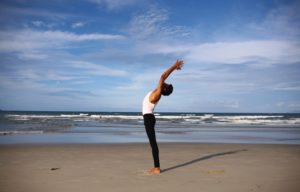
Ironic inconsistency is expected. When I visit my neurologist, my brain somehow instructs my muscles to behave. I pace the hallways with an entourage of physicians, silently willing my muscles to act up and take responsibility for their persistent shenanigans. On dates – talk about nerves – I tip to the other end of the spectrum. Maybe next time, I should invite my neurologist to join us for drinks. Murphy’s Law meet my Dystonia!
The unpredictable nature of Dystonia is a constant thorn in my side. Stairs pose an eternal question mark. Walking confronts me with a never-ending surprise party. One minute I’m strolling prettily, nary a care. Then I remember my legs – shazam, we have movement. Occasionally, my foot abruptly decides to make an illegal U-turn, leaving me stranded on a street corner waiting for my yin to find its yang. If only I could send my limbs to Driver’s Ed to reduce the Dystonia points on my license!